Archives

October 2002: Homeschool Journal, Minn of the Mississippi Unit Study

Wow. We read the first two sections of the book today. Our study has really jumped off on the right foot. I’ll admit I was concerned when I read the text that it would be pro-evolution instead of pro-creation. We have lots of exciting facts to research.

On page 10 of Minn, there are drawings of turtle eggs from the naturalist, Louis Agassiz, who is famous for his quote, ” I trust to outlive this mania” (1867: in reference to Darwinism) He toured the country disputing Darwin’s theory of evolution.

On page 14 of Minn, we read about the turtles’ ribs being different, then we found a link that says this is one of the reasons that evolution is disputed by some very famous naturalists.

In addition, the naturalist Agassiz was supported and allied with leading philanthroposts, politicians, and intellectuals such as Henry Wadsworth Longfellow, a Louisiana poet! I actually have an “imported from London” book of Longfellow’s works and IN it is a poem called “The Fiftieth Birthday of Agassiz”. . .

“And Nature, the old nurse, took The child upon her knee,

Saying: “Here is a story-book Thy Father has written for thee.

Come, wander with me, she said, Into regions yet untrod;

and read what is still unread in the manuscripts of God. . . “

**, how right you are that one thing leads to another:

  • We talked about creation vs evolution, looked up vocabulary words like: proponent; tortoise, carapace, gulf.
  • We discussed classification of animals and the system that was set up for this.
  • We discussed the difference between turtles, terrapins and tortoises.
  • We discussed the origins of words, ie; chelonia from chelonium-Greek for shield is the order to which turtles belong while tortoise refers to their feet because Latin ‘tortus’ means twisted.
  • We looked at a map of the Mississippi river starting at Minnesota and going down to the Gulf of Mexico.
  • We discussed taking a trip to the Gulf of Mexico and have decided to write for information concerning this.
  • We discussed crossing the M.River to get to Uncle Larry’s house at Thanksgiving.
  • We used the atlas, the dictionary and the encyclopedias, not to mention books off our shelves [thank goodness I have a good library] including some poetry by Longfellow and books we’d gotten from the public library.
  • Then we searched the internet for more.

I’m going to work on a web page this afternoon to link this stuff together in my mind. And lap books, too. It is so cool~!!
Sept. 23, 2002: Homeschool Journal

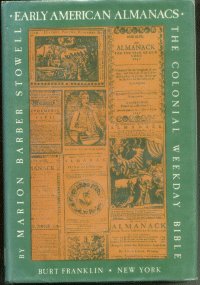
Well, it’s been a busy weekend. I got a great book on almanacs at the
library and another great book on the mind. I told the children we would
be creating almanacs – calendars that contained practical and helpful
information about when the sun rose and set, what to do to help animals
and hints to make plants produce better, even recipes and verses we
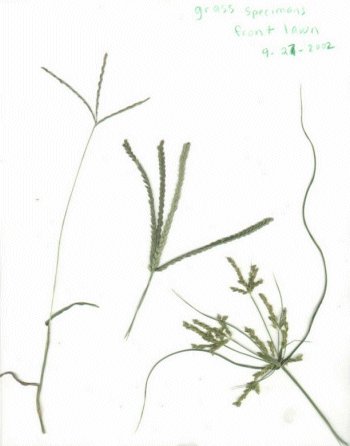
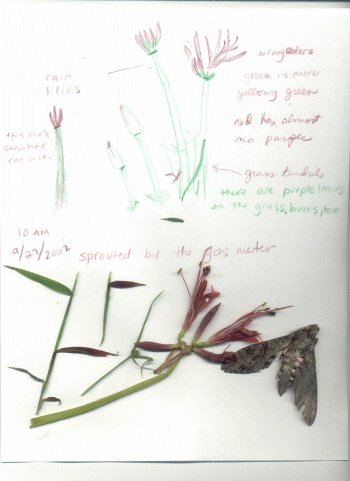
might like to use or read. I’ve asked the children to think of things
around our home about which we should keep records, such as our fruit
trees, lawn care, even pets. This will give me an opportunity later to
talk more with them about stewardship and the Bible’s teachings on that.

I’m going to talk to them tonight about George Washington’s journals
which he sometimes kept in the blank leaves of an almanack. I told some
of them about Bannekar, the black man who wrote an almanac and sent a
copy to Jefferson to persuade him that his race was oppressed, not
inherently stupid. He was a brilliant man who was taught to read on the
Bible and built and repaired clocks, trained himself by taking a pocket
watch apart and building one like it.

I have looked briefly at FIAR and will go back to it. I’d really like to
try a volume but don’t know how to start. I joined an internet unit
study group and have decided to do the Beatrix Potter and the Simple
Machines so far. My brother brought me a bag of books and Peter Rabbit
was among them so that has spurred an interest in the little ones. A.J.
loves inventing machines and has spatial capabilities so the other is
basically for his benefit, to show him “school” really means learning
and FUN! That’s my real goal with him this year, converting him to a
happy learning lifestyle. ( He had rotten public school experiences and
then I didn’t spend lots of time with him while I was working.) He’s
super quick, though, so I want to encourage him.

*** called and said that RR has changed policies somewhat since we
attended years ago. She said that, at any rate, the homeschool group
rents the building and has no rule about the earrings. I’ve got to find
out when the family night is going to be since I lost my newsletter.

I have to take Holly to Texas Saturday and Allen is going to a State
Rally for CMA- he’s president [of the local group]. Well, I gotta run. It’s great to have
someone to teach me this un-schooling stuff as I’m not very creative!

Acorn Academy

here’s that unit study group I told you about. Do you have a pdf
viewer? I can show you a copy of the complete Potter unit study.

[I joined this group by paying online with a credit card. Money well spent, I assure you!]

Sept. 20, 2002: Homeschooling Journal

I really enjoyed our visit. You are doing so many of the things I want
to do but never get around to. . . . I’m going to start our school
Monday and we’re going to start with some of the things you and I talked
about today. Almanacs, Book of Centuries and Lap Books.

Tell me more about thje videos you use for MathUSee. Are they very
expensive? Also, what are the names of those un-school authors you are
reading? I’d like to look for some of those to read myself.

The Zike video is checked in right now. Would you like me to put your
name on it and bring it out to you the next time we’re in town for long
enough? If not, we’ll see each other at the next event we both go to.

I did remember why we don’t go to the Family Fun night * and it’s because
it is held at RR family center. Unfortunately, they do have a rule about
males wearing ear-rings and as you see, well, I have a biker bunch here
so it kinda clashes… But I love Mom’s night Out and I will try to
attend all the skating things this year as I have the library.
Gotta run for now. But we gotta get together again. You are FABULOUS! !

*[We are corrected about this subject on the next page so be sure to read it. . .]

Sept. 16, 2002: Homeschool Journal, Charlotte Mason

I’m new to CM this year. We had Andreola’s Companion in the homeschool
library and I was the librarian this year. I was fascinated enough to
try to get a set of CM’s volumes. I only got 3 of them so far but it was
enough to intrigue me with her methods. We are putting it into practice
as much as we can every day.

Allen and I have been married since January 1, 1980 and we have nine
living children. They are 20, 18, 13, 11, 9 -10 tomorrow, 7, just turned
6, 3 and 8 months. [We had a birthday Friday and one tomorrow.] Five
girls and four boys.

We have been using Robinson Self-Teaching Curriculum modified to fit our
lifestyle. This is also a literature based program but very rigid. I
liked the methods for teaching children to be autodidactic and they
correlate well with CM. I agree heartily with her views on allowing
children to play and have free time to express themselves and use their
imaginations. I also believe CM hit the nail on the head in wishing to
create life-time lovers of learning.

I hope to create this joy of learning in my children by demonstrating it
in my own life. I have discovered that they find many things fascinating
not the least of which is whatever I myself am exploring, whether that
is great paintings by Monet or gardening in my own backyard. I
especially like to try to encourage my children in whatever talents or
interests they display, which has included inventing, cartooning,
drawing, cooking, acting and paper curling.

We are going to create a Book of Centuries for history and social
studies this year and a Household Almanac for science and nature
studies. I’m trying to create a list of books to read but we are
starting with all the books on our own shelves. I look forward to
forming closer and encouraging relationships with the members of this
list.

[Written to my email group.]

P.S. To learn more about the CMforMomsofMany group, please visit
CMforMomsofMany@yahoogroups.com

CMforMomsofMany@yahoogroups.com
* To contact the moderator of this group, send email to CMforMomsofMany-owner@yahoogroups.com

Providential Homeschooling

I have practiced providential homeschooling for years and have decided it is time to pass it on. God can help you with your homeschooling and will provide you with the things you need and want. I don’t believe in “prosperity preaching” but I do believe in providential living. The Lord said to be content so I have learned that happiness does not come with having more but wanting less. And I can look back and see that He has always taken care of me, providing me with all I need.
Hebrews 13:5 Let your conversation be without covetousness; and be content with such things as ye have: for he hath said, I will never leave thee, nor forsake thee.

I am assuming you are attempting to give your child a Christian education and are relying on God to supply all your needs. Philippians 4:19 But my God shall supply all your need according to his riches in glory by Christ Jesus.

May God bless you and keep you.

Teaching the Short Vowel sounds

It actually helps me to teach them the alphabet song, making them sing it more and more slowly as we go along so they enunciate the letters. Then we will proceed to teach them the sounds in the “good guy, tough guy” manner of Mary Pecci.

Here’s a hint for vowels. I had taught them the “old McDonalds” tune of AEIOU for long vowels and the alphabet song for a-z letters. I taught the children a short vowel song at the same time as the alphabet song- with hand signs, which they loved. We would go aaaapple and hold our hand out like we were fixing to bite an apple. eeeegg and hold your hands out like you are showing them an Easter egg. iiiitchy and act like you are scratching. ooooctupus and hold out both hands with thumbs turned under, wiggling the eight fingers to represent the octopus legs, and pointing with my index finger, I say uuuup. Later I start doing this with only the short sounds and not the helper words. The hand motions help them remember the sounds. Then when we are sounding something out, if they forget or I want to help them remember I can make the motion and they will remember the short vowel sound!

Sincerely, julieA

rescued by Christ, lifted by Grace

Frequently Asked Questions

Frequently Asked Questions

  1. Why do you
    homeschool?

    We started homeschooling our children because my husband
    worked a swing shift. This means he would swing from
    7-3pm, 3pm-11, and 11pm-7am. This meant that he would not
    see the children very much since they had to be in bed
    and go to school. If they stayed up late to see Daddy,
    they were cranky and sleepy. We now adjust our schedules
    to spend as much time as possible together.

    Also, we felt the children were showing signs of peer
    dependency. In other words, what the other children did
    and thought was becoming more important than parental
    expectations. We believe peer dependency is what leads to
    trouble in a lot of families. We felt pressure ourselves
    to allow the children to participate in activities we
    objected to (for a variety of different reasons) so they
    wouldn’t feel “left out” or penalized by being
    sent to “study hall” for the time period.

  2. Are you qualified
    to homeschool?

    Yes. Although I did not attend college to be an educator,
    I feel that I can teach my children as well as a
    professional educator. Better actually, because I have a
    deeply personal relationship and interest in each
    student. It is not my contention that all parents are
    able immediately to homeschool but I think they all have
    that right. My advantage is that my grandmother was a
    teacher and I loved school myself. I graduated #10 in my
    class of over 400 and had several scholarships. Later I did go back to college and graduate with Bachelor’s in Computer Information Systems as an honor student but that’s another story.

  3. What curriculum do you use?

    We use a modified Robinson Self-Teaching Curriculum program.
    Although we do not follow the RC curriculum guidelines exactly as set forth, purchasing the cds
    was the best thing I’ve ever done. It helped me to design a program that works great for us.

Teach Letter Recognition Self-teaching Program

We have been using Card Stacking to teach letter recognition. This method teaches independent study and will eventually free you to teach other children while the child learns the letters on his own. You will be surprised by how fast he learns to do this alone and enjoys working without you all day. He will not only teach himself the alphabet, upper and lower case but alphabetical order comes quickly, too.

You will need:

  • 26 4×6 or 5×7 inch letter cards with upper case letters on one side and lower case on the reverse. With all upper case facing upward, I cut off the bottom right corner if this is not already done so the child can learn to sort them easily.
  • A light colored binder with the alphabet written twice on the inside cover, once in upper case and once in lower case. It is best to copy from the cards you intend to use since the written forms should match.
  • A ziploc bag to store the cards. Clip the bottom corners to keep it from holding air when closed. I also add reinforced holes to clip the bag inside the binder.
  • To achieve greater independence, you may also wish to have a “my first” cassette player with a recording of the alphabet song and another of the alphabet spoken slowly several times.
  1. Sitting on the floor or at a table with plenty of room, begin by teaching the child to “stack” the cards by putting the corner that’s missing together on all the cards. [To the right, for upper case or left for lower case.] Do only upper or lower case each day.
  2. With the binder open, show the child how to put his finger under A or a. Say “put your finger under “a” and say ‘I’m going to find a.'” You are telling the child to say this to reinforce the letter name.
  3. Show the child how to stack the cards one at a time beside the beginning stack as he looks for the card that matches. Remind him to look if he passes the card but let him start over and find it by himself if he doesn’t notice that he missed it as he stacks the cards.
  4. When he finds it clap and say “hooray” as you show him how to make a new stack above the binder for the found letters.
  5. Say, “Good, now straighten your stack” and the first few times, help the child put the leftover cards back into a neat stack. This will make it easier to “go again” each time.
  6. Say, “Put your finger under that a/A on your binder. Now move it over (I say this as I move the finger myself the first few times) to b/B. Say ‘I’m going to find b.'”
  7. When the child says this, tell him to find it now. If he needs help, show him again how to stack the cards one at a time beside the beginning stack as he looks for the card that matches. Remind him to look if he passes the card but let him start over and find it by himself if he doesn’t notice it as he stacks the cards.
  8. When he finds it clap and say “hooray” as you show him how to place it in the found stack above the binder.
  9. Repeat throughout the alphabet, making sure the child places the found card on the found stack above the binder correctly.
  10. When he is finished, I show him how to play the “Slow ABC tape” and he reviews the alphabet as he hears it and goes through the cards with me. If you don’t have a tape, go through the stack saying the letters and showing him one at a time to reinforce.
  11. Do only upper or lower case each day. I only repeat the lesson if I am asked to do so (and I usually am asked) Please stop and do it if the child asks at any time of day during the first week.

    By the second week, they are usually doing upper or lower case upon my request and by themselves. I usually have them close to me the second week so I can observe and I like to have them bring the found stack to me when the stacking is finished so I can check that they are really in order.

You will simply be amazed at how quickly children learn to do this on their own if you enthusiastically insist that they can. If you act unsure or “help” constantly, you will not achieve independence very quickly.

My older children were taught to read by age four but since our family has grown larger and I have read more about “waiting” for formal education and learned more patience, I have allowed my children to wait until age five to even begin learning their alphabet. It evens out in the end result and if, like me, you have given up formal testing, too, you will not be worried.

I taught myself everything I really wanted to know and have confidence that if I teach them the basics, they will achieve whatever they wish to achieve. In fact, they always do better than I expected if I refrain from “instructing” them as to “how” something should be done.

Praise God.

10 Things I learned by Colette Longo

used with permission of Colette Longo [from the RC Forum].

Date: July 17, 2001 02:09 AM
Author: Colette
Subject: Things I have learned

Hi, I wrote this for another purpose, but thought I’d share it here too.

10 things I’ve learned about homeschooling:

1) Keep every thing as simple as you can. Jesus wrote with a stick in the dirt, and He was the greatest teacher that ever lived. He used no curriculum or flannel graphs or lesson plans. Homeschooling can be made far more complicated than it should be. A simpler approach is much more effective.

2) Stick to the 3 R’s. They form the foundation of life-long learning in every field because they are the tools of study. There will be no need to formalize any other subject if the children are doing their best in these 3, because people who are well grounded in reading, writing and math will approach other subjects boldly, independently and confidently.

3) Let the children teach themselves as much as they are able to. This teaches them responsibility, intellectual independence, and builds confidence. It’s also better for the parent/child relationship because you can focus on parenting instead of playing schoolteacher.

4) Use the most direct method available. For reading, read. For writing, write, for math, calculate and for Bible, read it. Don’t fall for catchy curriculums or methods that are really just something else for you and your child to learn.

5) Don’t worry about your child’s age or grade. Just let him do the best he can each day. Children grow intellectually like they do physically: in spurts. Although we may have an audience of skeptical relatives, homeschooling is not a circus, and we refuse to train our children to do tricks for people.

6) Minimize distractions in the home. Watch for excessiveness in entertainments, snacking, outings, phone conversations and the like. These things, although positive, can compete with the effectiveness of a homeschool.

7) Seek quality over quantity. A few tapes of great music, a small case of carefully chosen books, a few special play mates, and an occasional outing is better than a large, but poor quality collection.

8) If you must document your school activities, do it after the fact. This way you will not make promises you cannot keep. If you are required to make lesson plans, be as vague as permissible. Don’t give too much time and energy to transcripts, diplomas, records and the like. Keep the academic focus on learning and the rest will follow.

9) Put the needs of your youngest, most vulnerable children first. If an older child gets a little behind in school, I’m sure you can forgive yourself. But if something happened to the toddler while you were busy homeschooling, I don’t think you would be able to say the same.

10) Love the Lord your God with all your heart, mind and soul and don’t neglect to seek him early…giving him the first fruits of your day and teaching your children to do the same. I know that you are tired and that there aren’t enough hours in your day already, but we serve a God who can make the sun stand still.

I hope this helps relieve some of you homeschoolers of the burdens that we often take upon ourselves or allow others to put upon us. These are the ideas that have helped me the most.

Colette

This is borrowed from the Robinson Self-Teaching Curriculum forum with the permission of the author. This is EXACTLY how I feel, too. Thanks, Colette, I couldn’t have said it better. That’s why I’m quoting you here.sincerely, julieA
mother of ten, wife of one
God BLESS!